

Blog
Browse our latest blog posts to learn more about custom closet design principles and discover custom storage solutions that you'll love!
Custom Home Bar Omaha: Design a Bar Built for Hosting
Friends are coming over at seven. The wine is in the kitchen fridge, the glasses are in a cabinet across the room, and the bottle opener is hiding somewhere in the junk drawer. A custom home bar in Omaha puts all of it in one spot, so you can pour a drink and actually talk to your guests. With the holidays coming, there's no better time to give hosting a real home.
A great bar doesn't need a whole room. It needs a smart plan, the right cabinets, and a few details that make serving easy.
Wet Bar or Dry Bar? Start With How You Host
Begin with one question.
A wet bar has a sink. A dry bar doesn't. If you rinse glasses or mix a lot of cocktails, plumbing is worth it. If you mostly pour wine and grab cold drinks, a dry bar costs less and fits more places, like a dining room wall or the end of a finished basement.
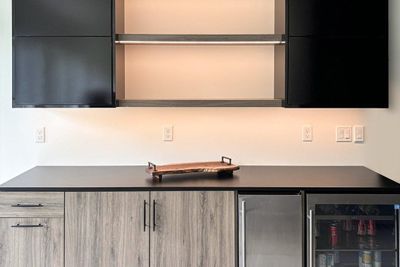
The project in our photo is a dry bar done right. Woodgrain base cabinets hold glassware and mixers, under-counter appliances keep drinks cold, and high-gloss black uppers frame floating shelves with built-in LED lighting. Simple. Polished. Easy to wipe down.
If you want guests to pull up a stool, plan for it early. The experts at This Old House list a standard bar counter at about 42 inches high and 24 inches deep, with 24 to 30 inches of counter for each seat. A serving-only bar can stay at a regular 36-inch counter height.
more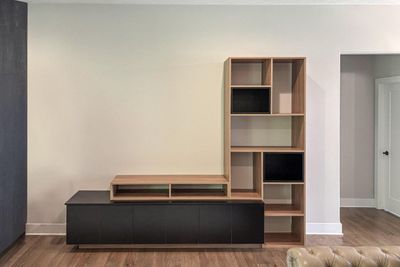
Custom Entertainment Center Omaha: Bring Calm Back to Your TV Wall
Movie night starts, and so does the hunt. The remote is under a cushion, the game controllers are knotted in a nest of cords, and the cable box blinks from a shelf that sags in the middle. A custom entertainment center in Omaha fixes that whole scene by giving every device, wire, and keepsake its own place. The TV finally gets a proper home, and your family room starts to feel like a room again.
Most living rooms make do with a store-bought TV stand. It's too short for today's screens, too shallow for a sound bar, and it never quite matches the trim. A built in entertainment center is designed around your wall, your gear, and the way your family actually watches.
What Makes a Built In Entertainment Center Work
It starts with the screen.
The team at Bob Vila puts the ideal TV center about 42 inches off the floor in most rooms, with a gap of 4 to 6 inches between the top of a console and the bottom of a mounted TV. We plan our consoles around numbers like these, so the screen lands at eye level from your sofa instead of making everyone crane their necks.
From there, it's all about mixing open and closed storage. Closed doors hide the receiver, the router, and the box of board game pieces. Open shelves hold books, family photos, and the pottery your daughter made in third grade. The project in the photo above shows the idea: a long, matte black console keeps the clutter out of sight, while a woodgrain shelf tower with black accent cubbies adds height and warmth.
more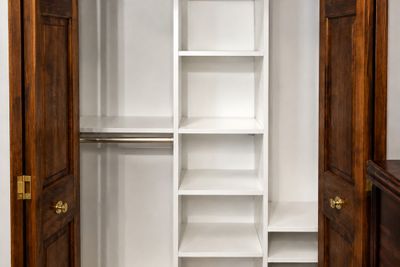
Reach-In Closets Omaha: Double Your Everyday Storage
The hallway closet is four feet wide, holds one rod and one shelf, and everything else lands on the floor. Reach-in closets in Omaha homes almost always start this way, with a shallow builder box that wastes half its own height. It's fixable. A custom reach-in system can nearly double what that closet holds by putting the empty air above the shelf to work, and we design and build every system in our Omaha factory, sized to the exact closet you have.
Why Reach-In Closet Design Starts With Vertical Space
The problem with a builder-grade reach-in isn't the width. It's the wasted height. A standard reach-in gives you one rod near 66 inches and one shelf above it, and everything between that shelf and the ceiling does nothing at all.
Smart reach-in closet design fixes this fast. The first move is double hanging: two rods stacked so shirts, folded pants, and jackets fit in half the height. Bob Vila's guide to the ideal closet rod height puts the top rod around 81 inches and the lower rod near 40, which is exactly how we plan a two-tier section. The second move is a shelf up high for luggage and off-season bins. Depth matters too. Most reach-in closets run 24 inches front to back. That's fine. We keep shelving in the 12 to 14 inch range so sweaters stay in view instead of vanishing into a cave. Reach-in closets are part of our custom residential storage solutions, designed room by room.
more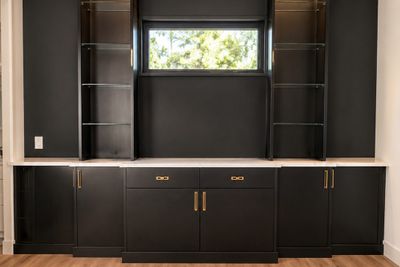
Custom Home Office Omaha: Built-Ins That Actually Work
Your laptop lives on the kitchen counter. Paper stacks drift from the dining table to the couch and back, and by Friday you can't find the one file you need. A custom home office in Omaha fixes that daily scramble by giving every tool, cord, and folder a permanent home. We design and build these workspaces in our local factory, so the desk sits at a true 30-inch working height and the shelving fits the way you actually work. No more borrowed corners. Just a room that helps you start the day calm instead of hunting.
Why a Custom Home Office Beats a Store-Bought Desk
A freestanding desk sits in the middle of a room and stops there. A built in home office uses the walls, the corners, and the vertical space above your head. The difference is real. It matters most in Omaha's older Dundee and Benson homes, where a spare bedroom might only run 10 by 11 feet.
We start with a wall of cabinetry rather than a single piece of furniture. Adjustable shelves handle books and binders. A run of soft-close drawers hides the printer and the tangle of charging cables, and file drawers sized for both letter and legal paper keep tax records upright. Our custom residential storage solutions treat a home office like any other room we design, wall by wall. If you love shelving that wraps a desk, This Old House collects dozens of built-in storage ideas worth a look. Clear floors read as a bigger room.
more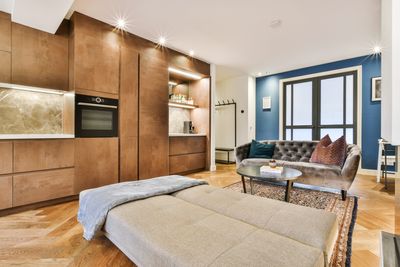
Murphy Bed Omaha: How to Turn One Room Into Two
Murphy Bed Omaha: How to Turn One Room Into Two
Your sister's family lands Friday, and the only spare room became your office two years ago. So the couch turns into a bed, somebody's neck pays for it, and your desk gets shoved into a corner for three days. A custom Murphy bed in Omaha ends that trade-off. The bed folds flat into a wall of cabinetry when guests head home, and your office, playroom, or craft room comes right back on Monday.
Wall beds have changed a lot since the ones you remember. Today's versions use counterbalanced lift systems that raise and lower with one hand, and they take a real mattress instead of a thin fold-up pad.
How a Modern Wall Bed Actually Works
The mechanism is simpler than most people expect.
As Bob Vila explains, a wall bed tucks a full-size mattress into a wall, closet, or cabinet when it isn't in use, then lowers on a pivoting frame when it is. Springs or gas pistons carry most of the weight, so the bed feels light coming down and stays put going up. Nothing gets folded or compressed, which is why a well-built wall bed sleeps like a regular bed.
more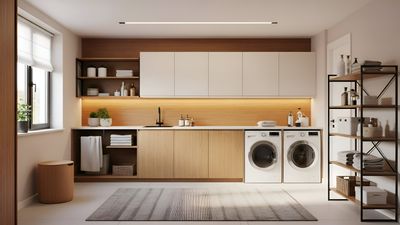
Laundry Room Storage Omaha: Make the Hardest-Working Room Work Harder
The dryer buzzes, you open the door, and the room fights back. Detergent bottles crowd the top of the washer, a basket of clean towels sits on the floor because no counter is clear, and the iron hides behind a stack of something you can't identify. Good laundry room storage in Omaha changes that. It gives the room a rhythm: sort in one spot, wash in the next, fold on a surface that stays open. Laundry still takes time. It just stops taking over your evening.
Most laundry rooms around the metro were framed as an afterthought, a small box off the garage or a corner of the basement. The square footage usually isn't the real problem. Nobody planned the vertical space, and a single wire shelf can only do so much.
Where Laundry Rooms Quietly Lose Their Space
Look up. That's where the room you're missing is hiding.
Above most washers and dryers sits 40 or more inches of bare wall doing nothing at all. The editors at Family Handyman point out that a simple shelf or a run of upper cabinets over the machines holds detergent, dryer sheets, and stain sticks without costing you an inch of floor. Add a closet rod at that same height and shirts go straight from the dryer to a hanger, which cuts your ironing pile in half.
more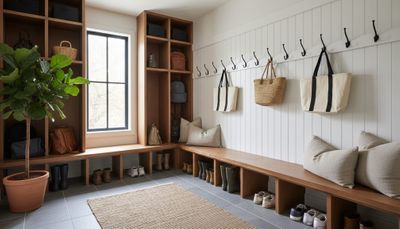
Mudroom Storage Omaha: Tame the Daily Drop Zone
The back door swings open and the flood begins. Backpacks hit the floor, wet boots track across the tile, and somebody's jacket lands on a chair that was never meant to be a coat rack. Smart mudroom storage in Omaha turns that chaotic entry into a spot that catches the mess before it spreads through your house. Give every coat, shoe, and bag a real home, and the after-school and after-work rush finally has somewhere to land.
A mudroom is your home's backstage. It's the drop zone that keeps mud, moisture, and clutter from reaching your living room. Build it right, and mornings get calmer while your floors stay cleaner.
The Building Blocks of Great Mudroom Storage
Every hardworking mudroom shares a few core pieces.
Start with the walls. Designers featured in Homes & Gardens suggest making every inch count with hooks and cubbies, and giving each family member their own spot. When your daughter knows exactly which hook holds her coat, you stop finding it on the stairs. A bench with storage underneath is the next must-have, perfect for pulling on shoes and hiding seasonal gear below.
more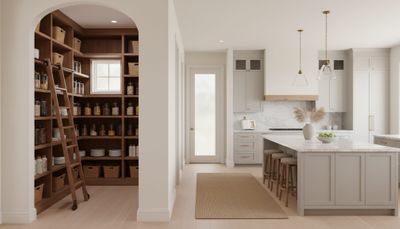
Custom Pantry Omaha: The Fix for a Kitchen That's Always Cluttered
You reach for the cereal and knock over three cans that avalanche onto the counter. Behind them, a bag of flour you forgot you owned. A custom pantry in Omaha starts with one simple idea: every item deserves a spot you can actually see. When your kitchen storage finally works with you instead of against you, the morning scramble slows down, and making dinner stops feeling like a treasure hunt.
Most pantries fail for the same reason. They're just deep shelves where food goes to disappear. The back row turns into a graveyard of expired sauces, and you buy a third jar of cinnamon because you couldn't find the first two. Good kitchen pantry storage fixes that with a plan built around how your family really eats.
Start With What You Actually Keep on Hand
Before you think about shelves, take everything out. Yes, everything.
The pros swear by this. Professional organizers featured by Family Handyman recommend a full clean-out first, then sorting what's left into clear categories: baking supplies, canned goods, grains, snacks, breakfast items, and beverages. Think like a grocery store. Keep like items together so you always know where the pasta lives.
more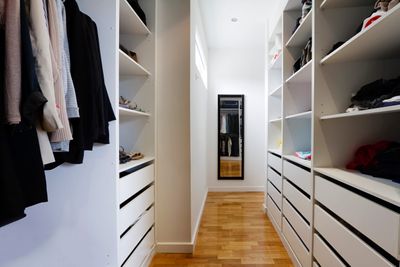
Closet Design Omaha: What to Expect From Start to Finish
You've finally decided to fix that closet. Then comes the part that stops a lot of homeowners cold: where do you even start? Closet design in Omaha can feel like a lot when you're staring at an empty wall, a Pinterest board, and a hundred finish swatches that all look kind of the same. Here's the reassuring truth. A good design process takes every one of those decisions off your plate and turns them into a clear, guided plan. That's the part we handle.
So instead of another "why custom is better" pitch, here's a look at how the process actually works, step by step, so you know what to expect before you ever call.
Step One Is a Conversation, Not a Sales Pitch
It all begins with a relaxed consultation. We're not there to upsell you. We're there to learn how you live.
We'll ask the real questions. Do you get dressed in the dark while your partner sleeps? Are shoes the thing that always ends up on the floor? Do you need a spot to fold laundry, or a place to hide the hamper? Those answers shape everything that follows. No pressure, ever.
This is also where we talk style. You'll see finish swatches in person, feel the weight of a soft-close drawer, and start picturing your space. Many homeowners walk into our showroom unsure and leave with a clear favorite. You can browse our custom closet designs to get a head start on ideas.
more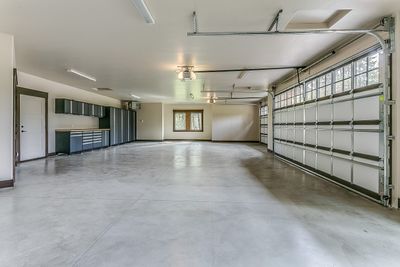
Garage Organization Omaha: Get Your Space Back This Season
You lift the garage door, and there it is. A leaning tower of bins, a tangle of hoses, and a bike helmet teetering on a shelf, ready to bonk you on the head. Good garage organization in Omaha starts with one honest admission: the stuff isn't the problem. The missing piece is a system. Once every item has a real home, the chaos clears, and you finally get to use the space the way it was meant to be used.
Most garages drift into clutter for the same reason. They become the catch-all for anything without a spot elsewhere in the house. The fix isn't a few plastic shelves shoved against a wall. It's a plan that puts your walls and ceiling to work.
Start by Getting Everything Off the Floor
The floor is the enemy. It blocks parking, traps dirt, and lets moisture creep into cardboard boxes from a cold slab. The smarter path is to go vertical.
Wall systems like slatwall let you hang rakes, shovels, and bikes, then rearrange the hooks in seconds as the seasons change. A handy trick from the editors at Family Handyman: screw a layer of three-quarter-inch plywood over your studs first, so you can mount hardware anywhere instead of hunting for a stud every time.
more